
Invisalign cost in Raleigh, straight away. My standard fee for a comprehensive case is $6,900, and there’s $2,000 off it at the moment, so today it’s $4,900, or from $278 a month, including warranty refinements and your retainers. Smaller cases are less: Invisalign Lite is around $3,800 and Invisalign Express starts at $2,999.
That’s the short answer. Here’s the part that matters more: why two quotes for the same mouth can be thousands of dollars apart, and what I think you should know before you start. I’ll be honest with you, this one is personal for me. I was an Invisalign patient myself over 15 years ago, and then I did it again years later because the technology got so much better. So when I talk about this treatment, I’m not just your dentist telling you what to do. I’ve been in the chair. I know what it feels like from both sides.
What Invisalign actually costs in Raleigh
For a full comprehensive case, the going rate at most offices around Raleigh is roughly $5,500 to $6,900. My standard fee sits at the top of that, and I’d rather tell you that than pretend otherwise. What’s different is what’s inside it, and that there’s $2,000 off it right now. You’ll also see lower “starting from” numbers advertised. Ask whether that is a full comprehensive case or a smaller one, because both exist and they are not the same treatment.
Not everyone needs a comprehensive case. Invisalign Lite is around $3,800 and runs four to six months. Invisalign Express, for small movements or a relapse after old braces, starts at $2,999 and can be done in two to three months.
If you want the treatment itself explained rather than the cost, that’s on our Invisalign in Raleigh page.
What’s actually in our price
- Warranty refinements. If we get to the end and something needs fine tuning, we handle it. No extra charge.
- One set of retainers. Included when you finish, not billed afterwards.
- Your perfection session. If your teeth would look better with some cosmetic reshaping or contouring at the end, we do that too. No extra charge for that either.
What that looks like side by side
| Treatment | How long it takes | Our fee |
|---|---|---|
| Invisalign Express, small movements | 2 to 3 months | From $2,999 |
| Invisalign Lite, simpler cases | 4 to 6 months | Around $3,800 |
| Comprehensive Invisalign | 6 months to a year | $6,900 standard, $4,900 with the current offer, or from $278 a month |
| Traditional braces, for comparison | Up to 2 years | Not something we place here |
| Refinements and your retainers | Included in every case above |
We also file insurance for you. Some plans include adult orthodontic coverage, some only cover children, and some don’t cover it at all. Where a plan does carry adult coverage at the higher end, your own cost can come down to around $2,000 to $2,500, but that depends entirely on your plan and we’ll tell you the real number before you commit.
Is $3,000 a good price for Invisalign?
Depends entirely on what it covers, and I’ll be straight with you: we have a $2,999 case ourselves. It’s Invisalign Express, for small movements, and it would be the wrong treatment for somebody who needs a bite corrected. So the real question isn’t whether $3,000 is a good price, it’s what that $3,000 is buying. A full comprehensive case or a small one? Are refinements in it? Retainers? Follow-up visits? A low number that doesn’t include those things isn’t actually a low number. You just find out later.
Here at our office the price is the price. No surprises at the finish line.
What the fee covers, and what it doesn’t
Whitening is included with a comprehensive case, or comes in as a bonus promotion. Refinements and your first set of retainers are in the price.
What isn’t: if you lose a tray, a replacement carries a fee, and extra retainers afterwards – a four-set of Vivera retainers, or permanent retainers – are a small optional extra. I’d rather you heard that from me now than at the end.
You can use HSA or FSA funds for Invisalign here, and we file your insurance for you.
Looking for lower-cost Invisalign in Raleigh, or a deal?
What people are really asking when they search for Invisalign deals is simpler than it sounds: what’s the least I can pay and still have this done right?
Two things genuinely bring the number down, and neither involves cutting corners: whether a limited case gets you where you want to go rather than a comprehensive one, and whether your plan carries adult orthodontic coverage, which we file for you.
The offer running right now is $2,000 off comprehensive treatment, with payment plans from $278 a month. That’s the $6,900 to $4,900 I mentioned at the top, and the consultation to find out which case you need is complimentary. The terms are on that page, and when an offer ends we’ll tell you plainly rather than quietly moving the starting number, because I’m not interested in discounting off a price nobody actually pays.
Why two quotes for the same mouth look nothing alike
What makes one case cost more than another is mostly complexity: how many teeth are moving, how far, whether we’re correcting a bite or only the alignment, and how long treatment runs.
The other thing people don’t realize is that Invisalign isn’t one product.
- Comprehensive is the full treatment, for cases with real movement to do.
- Invisalign Lite is for simpler cases.
- Invisalign Express is for very small cases. Say you had braces years ago, didn’t wear your retainers, and one or two teeth have drifted a little. You want that corrected before you get new retainers.
They’re priced differently because they’re genuinely different treatments, and part of your consultation is working out which one fits. I’m not going to put you in a comprehensive case if a limited case gets you there, and I’m not going to undertreat you either.
What three real cases cost
- Mild crowding with a bit of shifting. Invisalign Express, $2,999, done in a couple of months.
- More movement, still straightforward. Invisalign Lite, $3,800, around six months.
- A genuinely difficult bite. Comprehensive, $6,900 standard or $4,900 with the offer running, and even then we finished in under a year.
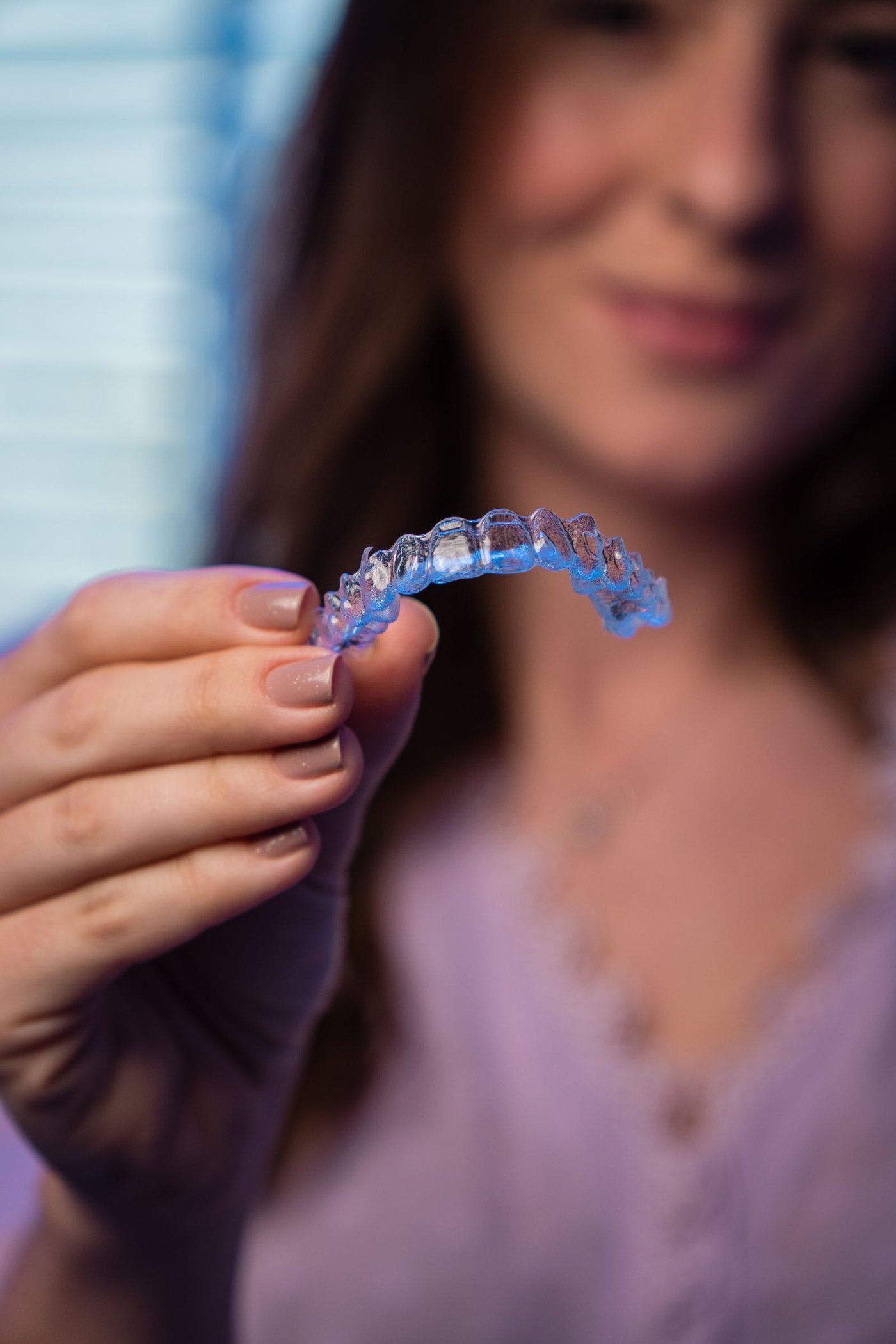
Why do some dentists steer patients away from Invisalign?
Look. Some dentists don’t recommend Invisalign for real clinical reasons. If you have untreated gum disease, that has to be addressed first. If you have a severe bite problem that involves your jaw structure, that might need a different approach. Those are legitimate reasons and you should listen to them.
But some dentists steer patients away because they’re not trained in it. That’s not a clinical opinion, that’s just what they offer, and I think patients deserve to know which of the two they’re hearing. So ask. There is no harm in asking which one applies to you.
What you are paying for besides the trays
I graduated from UNC dental school in 2012, did a year of continuing education and residency at the VA in Fayetteville, and got certified in Invisalign after that. I’ve been doing this for over 14 years, and we’re a Diamond Top 1% Invisalign provider.
What has made me better at this isn’t only the number of cases. It’s the people I’ve learned from: Molis Coaching, Dr. Matt Hicks of DNTL.LIFE, and Dr. Karla Soto, who changed how I approach every case. She taught me to use Invisalign alongside Smile Architect, the planning software that puts the tooth movement and the cosmetic work on one screen.
Here’s the thing. I’m not just moving teeth from point A to point B. I’m designing where they land: how they’ll look when you smile, how they’ll function, how they’ll hold up over time.
We scan with iTero, now the Lumina, and we have two scanners in the office, which we absolutely love. That scan becomes the virtual model we send to Invisalign to start your case. Compared with 2012, the precision and predictability have come a long way, and the results we get now are things I honestly couldn’t have delivered back then.
Hear it from one of our patients
I’d rather you hear this from a patient than from me.
Why I do this
Invisalign changed my life. I went through it as a patient, I saw what it felt like to get to the end and love what I saw in the mirror, and that’s exactly what drove me to offer it to my patients from day one. When a patient finishes treatment and smiles at herself for the first time, really smiles, without thinking about it first, that’s everything. It’s life changing, and I say that as someone who has lived it.
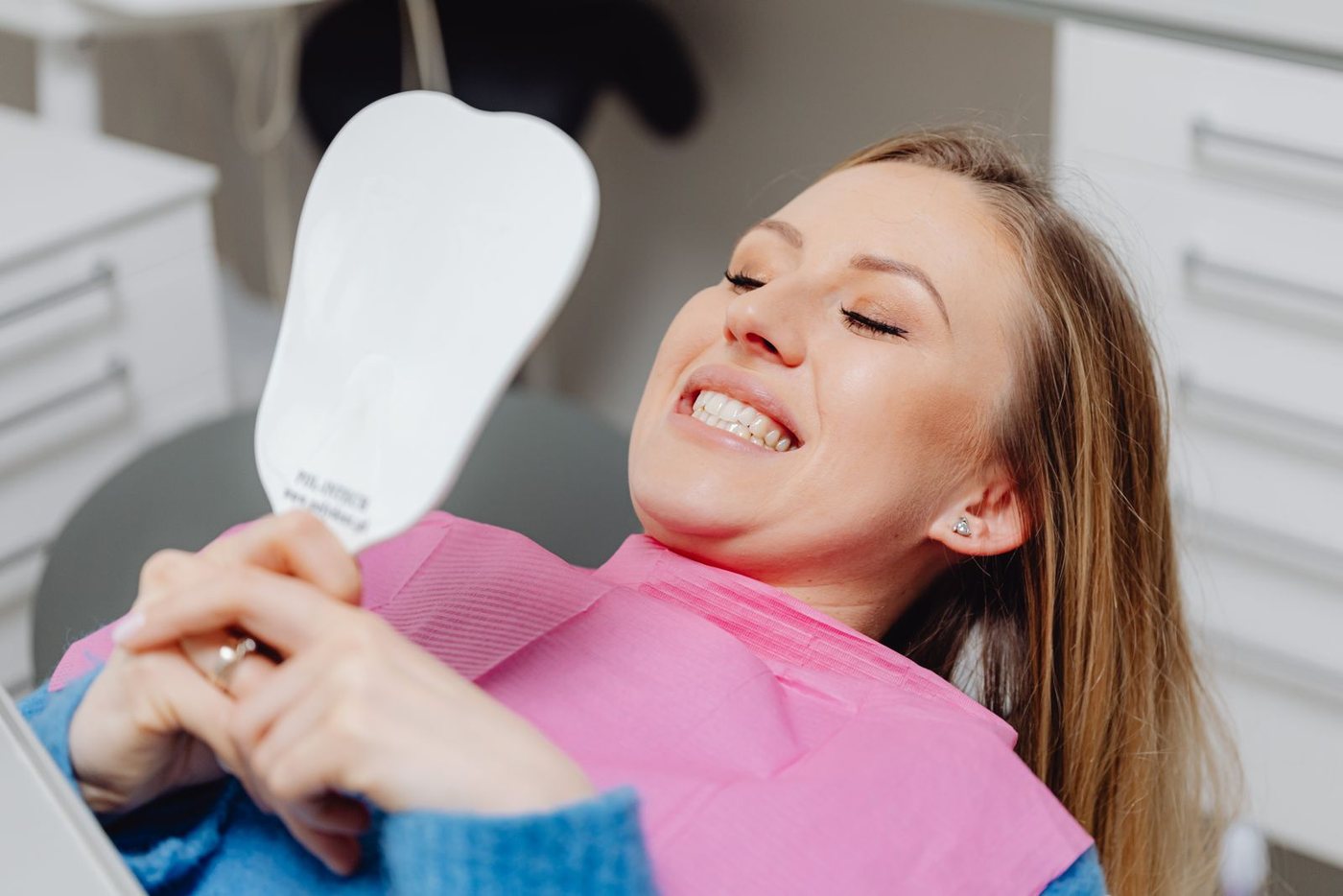
A few things we do at Fusion that I think set us apart
The retainer you finish with doubles as a night guard
Invisalign’s retainer with bite ramps – a retainer with small built-up areas that stop your back teeth grinding together – is one of my favorite things in dentistry right now. It holds your result in place and works as a dual night guard, so you’re protecting your investment long term. Not many offices talk about that, and I think it’s a real benefit.
We use Invisalign before implants
Before I place a dental implant, I almost always move the surrounding teeth into position first. Once an implant is in, it cannot be moved. Ever. Getting the alignment right before we replace the tooth gives a far better final result. And while you’re in treatment we can use the tray as a placeholder for the missing tooth, which holds the space perfectly until we’re ready.
We use Invisalign before cosmetic work
I almost always align teeth before any cosmetic dentistry too. Get the foundation right, build on top of it, and you protect the investment. It also means we can often do less: moving a tooth into place beats grinding a good one down to fake the position.
Who is not a good candidate?
- Active gum disease. We treat that first. Interestingly, I have also found Invisalign helps my patients prevent gum disease progressing, once things are healthy.
- Significant bite problems involving the jaw itself. That’s a bigger conversation than Invisalign alone.
- Someone who genuinely won’t wear the trays. They need to be in 20 to 22 hours a day. I’ll say that plainly, because the treatment only works if you do your part.
Most of my patients are incredibly compliant, even the kids, because we take the time to help them understand what they’re working toward. By the end they care more about their teeth than when they started, and they’re protective of them.
The 30 minute rule
People ask about this a lot, so here it is. Take your trays out to eat, and to drink anything other than water. Get them back in within about 30 to 40 minutes. That’s it. That’s the whole rule.
Every hour they’re out is an hour you’re not making progress. The patients who follow this usually finish on time, with the result we planned. The ones who don’t can stretch treatment out significantly.
Real results from our office
The work answers this one better than I can. Straightened with Invisalign, restored with implants, perfected with composite veneers.
And this one is my own smile. Everybody assumes I have had veneers. I have not. It’s Invisalign that gave me this smile, which is exactly why I’m so comfortable recommending it.
Frequently asked questions
What is the average cost of Invisalign in North Carolina?
Most comprehensive cases around Raleigh run about $5,500 to $6,900. My standard comprehensive fee is $6,900, and with the $2,000 offer running it’s $4,900 today, refinements and retainers included. Invisalign Lite is around $3,800 and Express starts at $2,999. Where a plan carries adult orthodontic coverage at the higher end, your own cost can come down to around $2,000 to $2,500, but that depends entirely on the plan.
How long does Invisalign take?
Invisalign Express is two to three months, Lite is four to six, and a comprehensive case runs from six months up to a year. Traditional braces can take two years for the same result.
Does the price include whitening or replacement retainers?
Whitening comes with a comprehensive case, or as a bonus promotion. Refinements and your first set of retainers are included. Replacement trays if you lose one carry a fee, and extra retainers afterwards, like a four-set of Vivera or permanent retainers, are a small optional extra.
Is $3,000 a good price for Invisalign?
You have to ask what is included. If refinements and retainers aren’t in that number, it’s not as low as it looks.
Why don’t dentists recommend Invisalign?
Sometimes there are real clinical reasons, like untreated gum disease or a significant bite problem involving the jaw. Sometimes they simply don’t offer it. Ask which one applies to you.
What is the 30 minute rule for Invisalign?
Trays out to eat or to drink anything other than water, and back in within about 30 to 40 minutes. Twenty to 22 hours a day is what moves your teeth on schedule.
Does insurance cover Invisalign?
Often, partly. It depends whether your plan includes adult orthodontic coverage or only covers children, and how much it pays. We file it for you and tell you the real number before you commit. You can also use HSA or FSA funds here.
Will anyone be able to tell I am wearing them?
Most people won’t notice. That’s exactly the point of Invisalign in Raleigh over brackets and wires.
How do I know whether I need comprehensive or a limited case?
We scan your teeth and plan the movement first, then tell you. That’s the only honest way to answer it, and it’s what your consultation is for.
Come and find out what your case actually looks like

If you want to know what Invisalign would cost for you specifically, come in for a complimentary consultation here in Raleigh. We’ll look at your situation, show you what is possible, and give you a real number rather than a guess. We’ll go through the payment options while you’re here too.
You can book at FusionDentalCare.com or call us at (919) 977-7438. We’re at 6400 Creedmoor Road, Suite 103, Raleigh, NC 27613.
Prices in this article are current as of September 2026.