Invisalign cost in Raleigh, straight away. My standard fee for a comprehensive case is $6,900, and there’s $2,000 off it at the moment, so today it’s $4,900, or from $278 a month, including warranty refinements and your retainers. Smaller cases are less: Invisalign Lite is around $3,800 and Invisalign Express starts at $2,999.

That’s the short answer. Here’s the part that matters more: why two quotes for the same mouth can be thousands of dollars apart, and what I think you should know before you start. I’ll be honest with you, this one is personal for me. I was an Invisalign patient myself over 15 years ago, and then I did it again years later because the technology got so much better. So when I talk about this treatment, I’m not just your dentist telling you what to do. I’ve been in the chair. I know what it feels like from both sides.

What Invisalign actually costs in Raleigh

For a full comprehensive case, the going rate at most offices around Raleigh is roughly $5,500 to $6,900. My standard fee sits at the top of that, and I’d rather tell you that than pretend otherwise. What’s different is what’s inside it, and that there’s $2,000 off it right now. You’ll also see lower “starting from” numbers advertised. Ask whether that is a full comprehensive case or a smaller one, because both exist and they are not the same treatment.

Not everyone needs a comprehensive case. Invisalign Lite is around $3,800 and runs four to six months. Invisalign Express, for small movements or a relapse after old braces, starts at $2,999 and can be done in two to three months.

If you want the treatment itself explained rather than the cost, that’s on our Invisalign in Raleigh page.

What’s actually in our price

  • Warranty refinements. If we get to the end and something needs fine tuning, we handle it. No extra charge.
  • One set of retainers. Included when you finish, not billed afterwards.
  • Your perfection session. If your teeth would look better with some cosmetic reshaping or contouring at the end, we do that too. No extra charge for that either.

What that looks like side by side

Treatment How long it takes Our fee
Invisalign Express, small movements 2 to 3 months From $2,999
Invisalign Lite, simpler cases 4 to 6 months Around $3,800
Comprehensive Invisalign 6 months to a year $6,900 standard, $4,900 with the current offer, or from $278 a month
Traditional braces, for comparison Up to 2 years Not something we place here
Refinements and your retainers Included in every case above

We also file insurance for you. Some plans include adult orthodontic coverage, some only cover children, and some don’t cover it at all. Where a plan does carry adult coverage at the higher end, your own cost can come down to around $2,000 to $2,500, but that depends entirely on your plan and we’ll tell you the real number before you commit.

Is $3,000 a good price for Invisalign?

Depends entirely on what it covers, and I’ll be straight with you: we have a $2,999 case ourselves. It’s Invisalign Express, for small movements, and it would be the wrong treatment for somebody who needs a bite corrected. So the real question isn’t whether $3,000 is a good price, it’s what that $3,000 is buying. A full comprehensive case or a small one? Are refinements in it? Retainers? Follow-up visits? A low number that doesn’t include those things isn’t actually a low number. You just find out later.

Here at our office the price is the price. No surprises at the finish line.

What the fee covers, and what it doesn’t

Whitening is included with a comprehensive case, or comes in as a bonus promotion. Refinements and your first set of retainers are in the price.

What isn’t: if you lose a tray, a replacement carries a fee, and extra retainers afterwards – a four-set of Vivera retainers, or permanent retainers – are a small optional extra. I’d rather you heard that from me now than at the end.

You can use HSA or FSA funds for Invisalign here, and we file your insurance for you.

Looking for lower-cost Invisalign in Raleigh, or a deal?

What people are really asking when they search for Invisalign deals is simpler than it sounds: what’s the least I can pay and still have this done right?

Two things genuinely bring the number down, and neither involves cutting corners: whether a limited case gets you where you want to go rather than a comprehensive one, and whether your plan carries adult orthodontic coverage, which we file for you.

The offer running right now is $2,000 off comprehensive treatment, with payment plans from $278 a month. That’s the $6,900 to $4,900 I mentioned at the top, and the consultation to find out which case you need is complimentary. The terms are on that page, and when an offer ends we’ll tell you plainly rather than quietly moving the starting number, because I’m not interested in discounting off a price nobody actually pays.

Why two quotes for the same mouth look nothing alike

What makes one case cost more than another is mostly complexity: how many teeth are moving, how far, whether we’re correcting a bite or only the alignment, and how long treatment runs.

The other thing people don’t realize is that Invisalign isn’t one product.

  • Comprehensive is the full treatment, for cases with real movement to do.
  • Invisalign Lite is for simpler cases.
  • Invisalign Express is for very small cases. Say you had braces years ago, didn’t wear your retainers, and one or two teeth have drifted a little. You want that corrected before you get new retainers.

They’re priced differently because they’re genuinely different treatments, and part of your consultation is working out which one fits. I’m not going to put you in a comprehensive case if a limited case gets you there, and I’m not going to undertreat you either.

What three real cases cost

  • Mild crowding with a bit of shifting. Invisalign Express, $2,999, done in a couple of months.
  • More movement, still straightforward. Invisalign Lite, $3,800, around six months.
  • A genuinely difficult bite. Comprehensive, $6,900 standard or $4,900 with the offer running, and even then we finished in under a year.
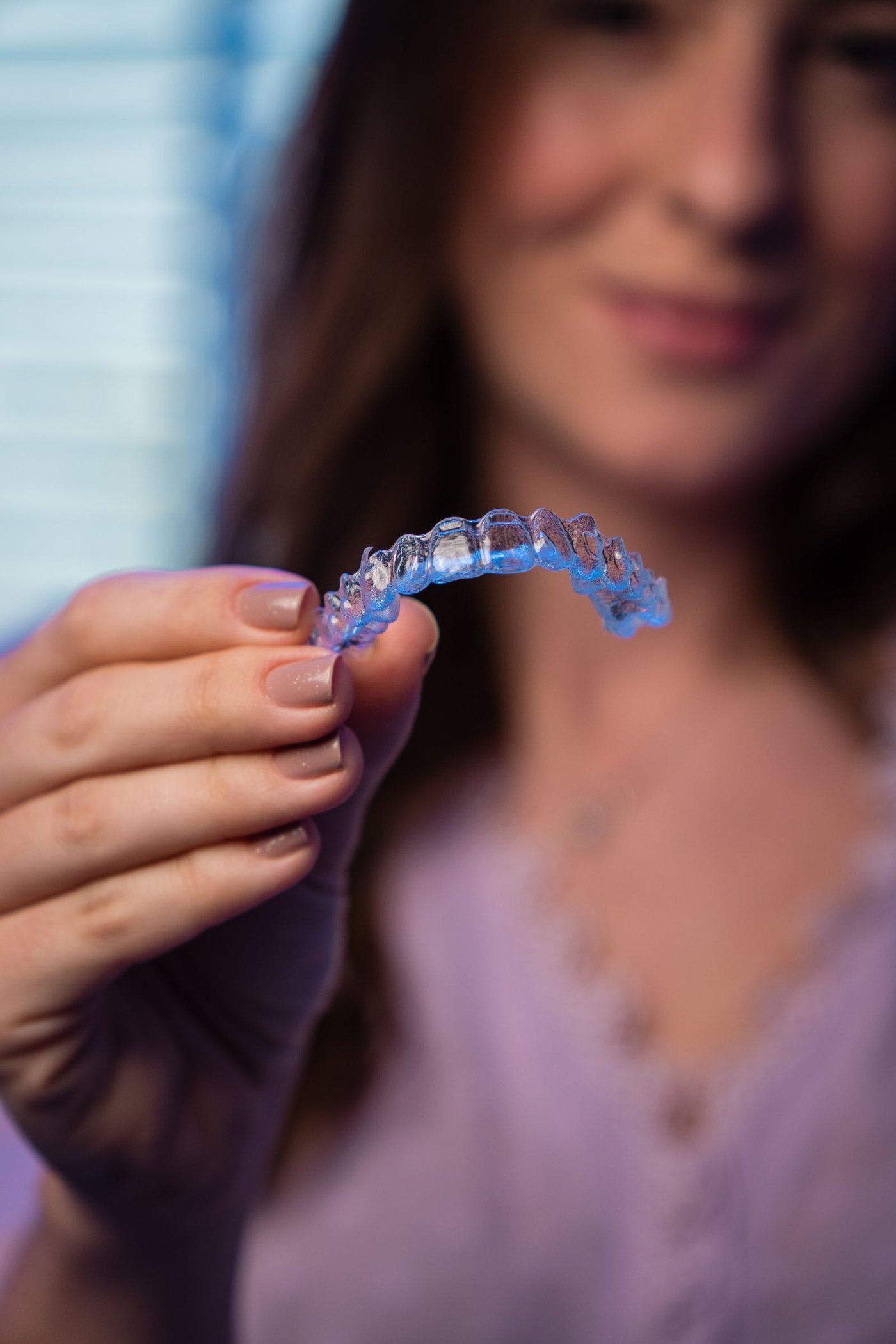
Close up of a clear aligner tray held between finger and thumb
The trays themselves are the easy part. Planning where your teeth land is the work.

Why do some dentists steer patients away from Invisalign?

Look. Some dentists don’t recommend Invisalign for real clinical reasons. If you have untreated gum disease, that has to be addressed first. If you have a severe bite problem that involves your jaw structure, that might need a different approach. Those are legitimate reasons and you should listen to them.

But some dentists steer patients away because they’re not trained in it. That’s not a clinical opinion, that’s just what they offer, and I think patients deserve to know which of the two they’re hearing. So ask. There is no harm in asking which one applies to you.

What you are paying for besides the trays

I graduated from UNC dental school in 2012, did a year of continuing education and residency at the VA in Fayetteville, and got certified in Invisalign after that. I’ve been doing this for over 14 years, and we’re a Diamond Top 1% Invisalign provider.

What has made me better at this isn’t only the number of cases. It’s the people I’ve learned from: Molis Coaching, Dr. Matt Hicks of DNTL.LIFE, and Dr. Karla Soto, who changed how I approach every case. She taught me to use Invisalign alongside Smile Architect, the planning software that puts the tooth movement and the cosmetic work on one screen.

Here’s the thing. I’m not just moving teeth from point A to point B. I’m designing where they land: how they’ll look when you smile, how they’ll function, how they’ll hold up over time.

We scan with iTero, now the Lumina, and we have two scanners in the office, which we absolutely love. That scan becomes the virtual model we send to Invisalign to start your case. Compared with 2012, the precision and predictability have come a long way, and the results we get now are things I honestly couldn’t have delivered back then.

View this post on Instagram

Hear it from one of our patients

I’d rather you hear this from a patient than from me.

Why I do this

Invisalign changed my life. I went through it as a patient, I saw what it felt like to get to the end and love what I saw in the mirror, and that’s exactly what drove me to offer it to my patients from day one. When a patient finishes treatment and smiles at herself for the first time, really smiles, without thinking about it first, that’s everything. It’s life changing, and I say that as someone who has lived it.

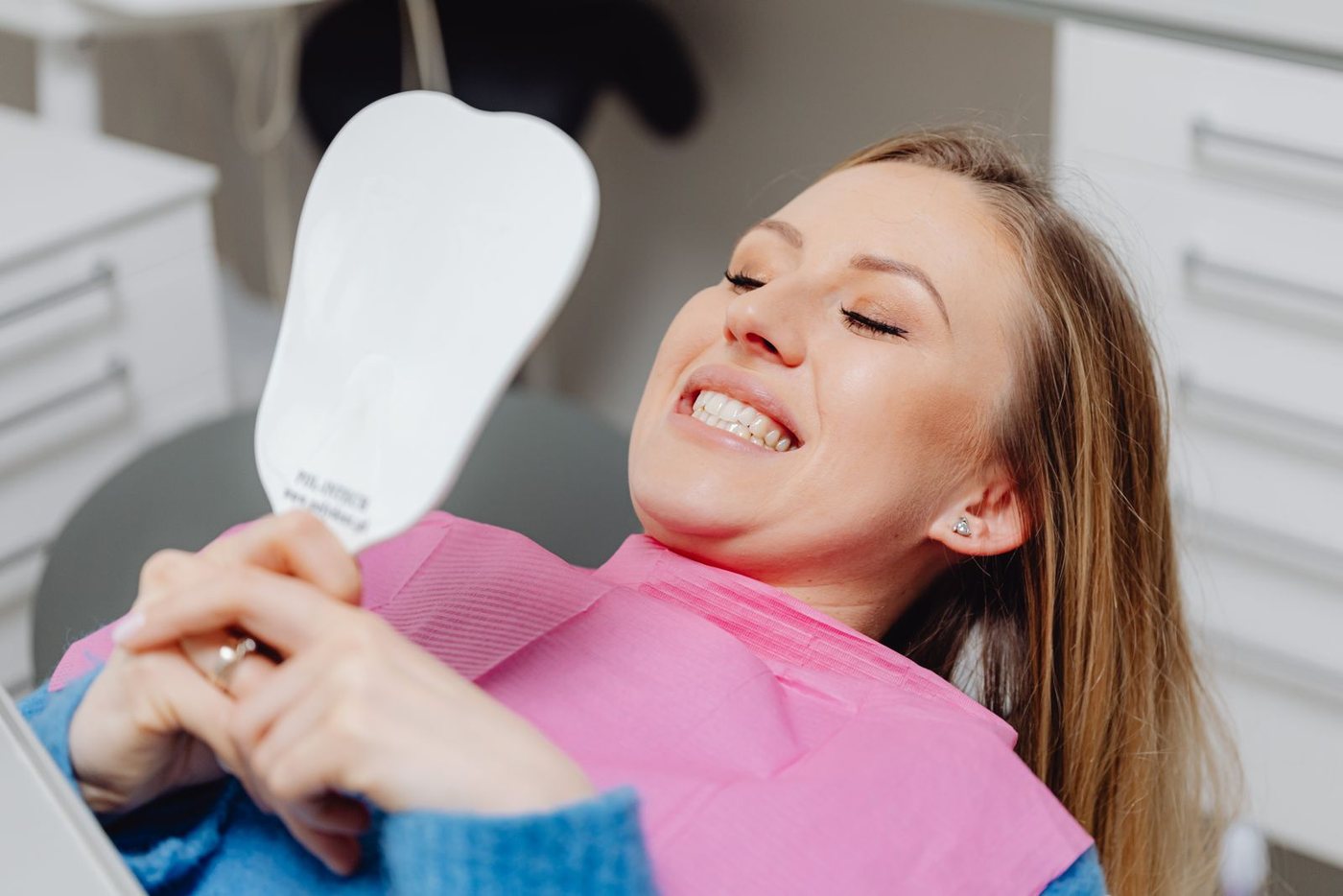
Woman smiling at her straightened teeth in a hand mirror after clear aligner treatment
The moment at the end is the whole point of the work.

A few things we do at Fusion that I think set us apart

The retainer you finish with doubles as a night guard

Invisalign’s retainer with bite ramps – a retainer with small built-up areas that stop your back teeth grinding together – is one of my favorite things in dentistry right now. It holds your result in place and works as a dual night guard, so you’re protecting your investment long term. Not many offices talk about that, and I think it’s a real benefit.

We use Invisalign before implants

Before I place a dental implant, I almost always move the surrounding teeth into position first. Once an implant is in, it cannot be moved. Ever. Getting the alignment right before we replace the tooth gives a far better final result. And while you’re in treatment we can use the tray as a placeholder for the missing tooth, which holds the space perfectly until we’re ready.

We use Invisalign before cosmetic work

I almost always align teeth before any cosmetic dentistry too. Get the foundation right, build on top of it, and you protect the investment. It also means we can often do less: moving a tooth into place beats grinding a good one down to fake the position.

Who is not a good candidate?

  • Active gum disease. We treat that first. Interestingly, I have also found Invisalign helps my patients prevent gum disease progressing, once things are healthy.
  • Significant bite problems involving the jaw itself. That’s a bigger conversation than Invisalign alone.
  • Someone who genuinely won’t wear the trays. They need to be in 20 to 22 hours a day. I’ll say that plainly, because the treatment only works if you do your part.

Most of my patients are incredibly compliant, even the kids, because we take the time to help them understand what they’re working toward. By the end they care more about their teeth than when they started, and they’re protective of them.

The 30 minute rule

People ask about this a lot, so here it is. Take your trays out to eat, and to drink anything other than water. Get them back in within about 30 to 40 minutes. That’s it. That’s the whole rule.

Every hour they’re out is an hour you’re not making progress. The patients who follow this usually finish on time, with the result we planned. The ones who don’t can stretch treatment out significantly.

Real results from our office

The work answers this one better than I can. Straightened with Invisalign, restored with implants, perfected with composite veneers.

View this post on Instagram

View this post on Instagram

And this one is my own smile. Everybody assumes I have had veneers. I have not. It’s Invisalign that gave me this smile, which is exactly why I’m so comfortable recommending it.

View this post on Instagram

Frequently asked questions

What is the average cost of Invisalign in North Carolina?

Most comprehensive cases around Raleigh run about $5,500 to $6,900. My standard comprehensive fee is $6,900, and with the $2,000 offer running it’s $4,900 today, refinements and retainers included. Invisalign Lite is around $3,800 and Express starts at $2,999. Where a plan carries adult orthodontic coverage at the higher end, your own cost can come down to around $2,000 to $2,500, but that depends entirely on the plan.

How long does Invisalign take?

Invisalign Express is two to three months, Lite is four to six, and a comprehensive case runs from six months up to a year. Traditional braces can take two years for the same result.

Does the price include whitening or replacement retainers?

Whitening comes with a comprehensive case, or as a bonus promotion. Refinements and your first set of retainers are included. Replacement trays if you lose one carry a fee, and extra retainers afterwards, like a four-set of Vivera or permanent retainers, are a small optional extra.

Is $3,000 a good price for Invisalign?

You have to ask what is included. If refinements and retainers aren’t in that number, it’s not as low as it looks.

Why don’t dentists recommend Invisalign?

Sometimes there are real clinical reasons, like untreated gum disease or a significant bite problem involving the jaw. Sometimes they simply don’t offer it. Ask which one applies to you.

What is the 30 minute rule for Invisalign?

Trays out to eat or to drink anything other than water, and back in within about 30 to 40 minutes. Twenty to 22 hours a day is what moves your teeth on schedule.

Does insurance cover Invisalign?

Often, partly. It depends whether your plan includes adult orthodontic coverage or only covers children, and how much it pays. We file it for you and tell you the real number before you commit. You can also use HSA or FSA funds here.

Will anyone be able to tell I am wearing them?

Most people won’t notice. That’s exactly the point of Invisalign in Raleigh over brackets and wires.

How do I know whether I need comprehensive or a limited case?

We scan your teeth and plan the movement first, then tell you. That’s the only honest way to answer it, and it’s what your consultation is for.

Come and find out what your case actually looks like

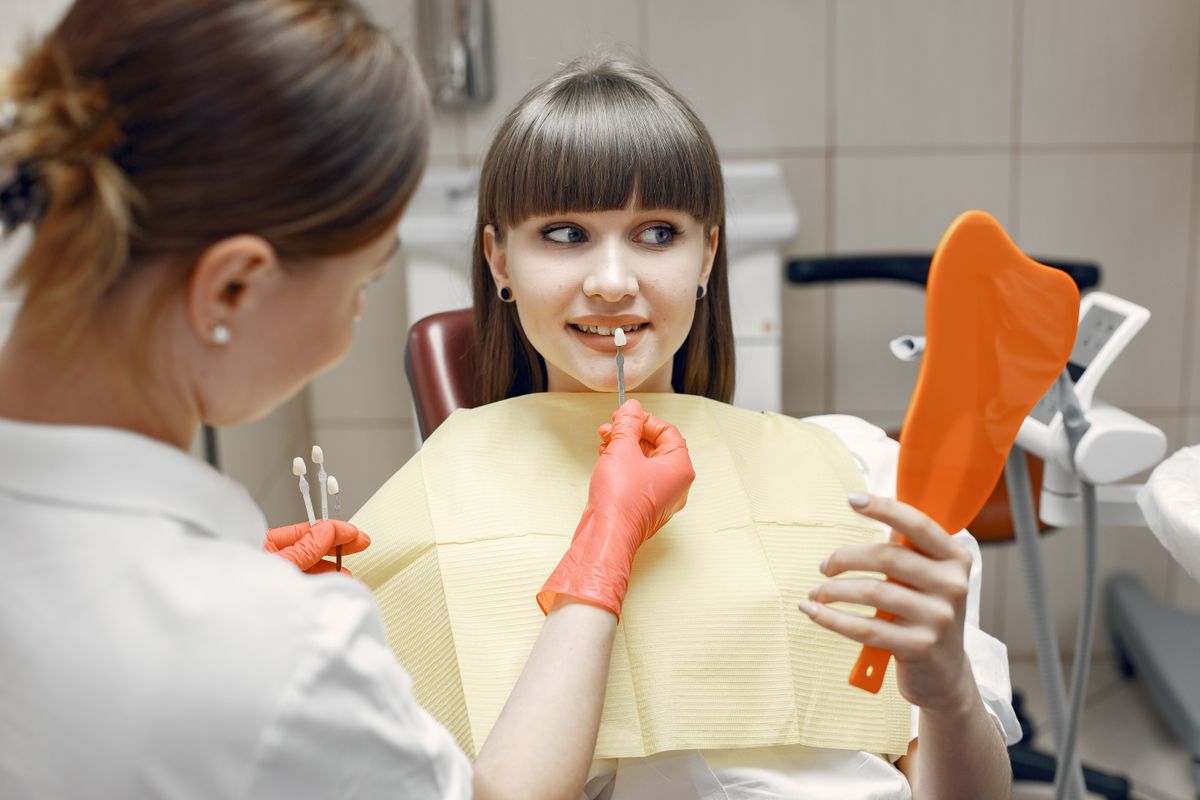
Woman smiling in a modern dental office before her aligner consultation
The consultation is complimentary, and you leave with a real number rather than a guess.

If you want to know what Invisalign would cost for you specifically, come in for a complimentary consultation here in Raleigh. We’ll look at your situation, show you what is possible, and give you a real number rather than a guess. We’ll go through the payment options while you’re here too.

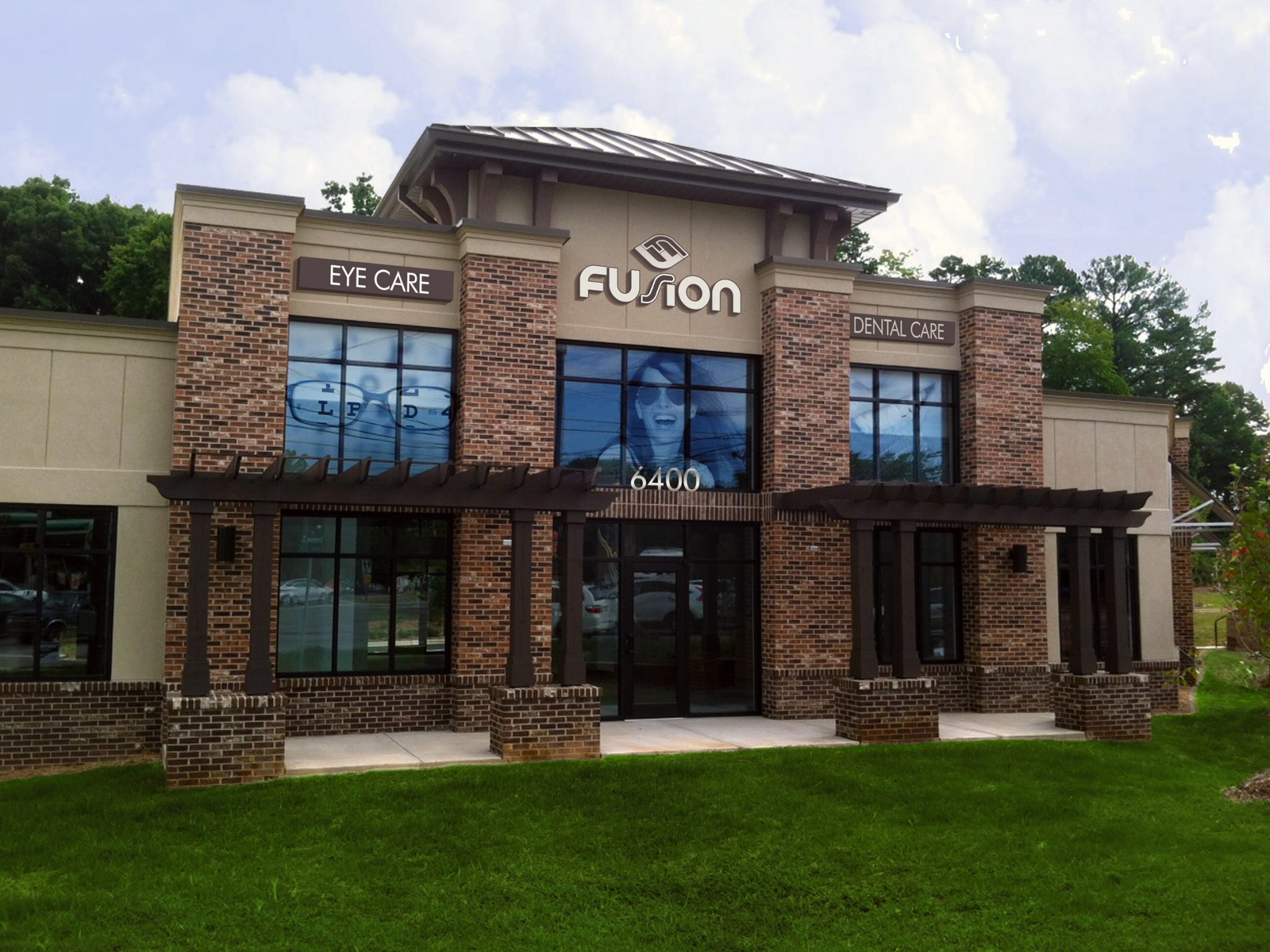
You can book at FusionDentalCare.com or call us at (919) 977-7438. We’re at 6400 Creedmoor Road, Suite 103, Raleigh, NC 27613.

Prices in this article are current as of September 2026.

I get this question a lot, and I actually love it, because it gives me a chance to be real with people. Is a cosmetic dentist different from a regular dentist? Is it a real specialty? Does it matter who you see? Here is the honest answer, from someone who does both kinds of dentistry every day here in Raleigh.

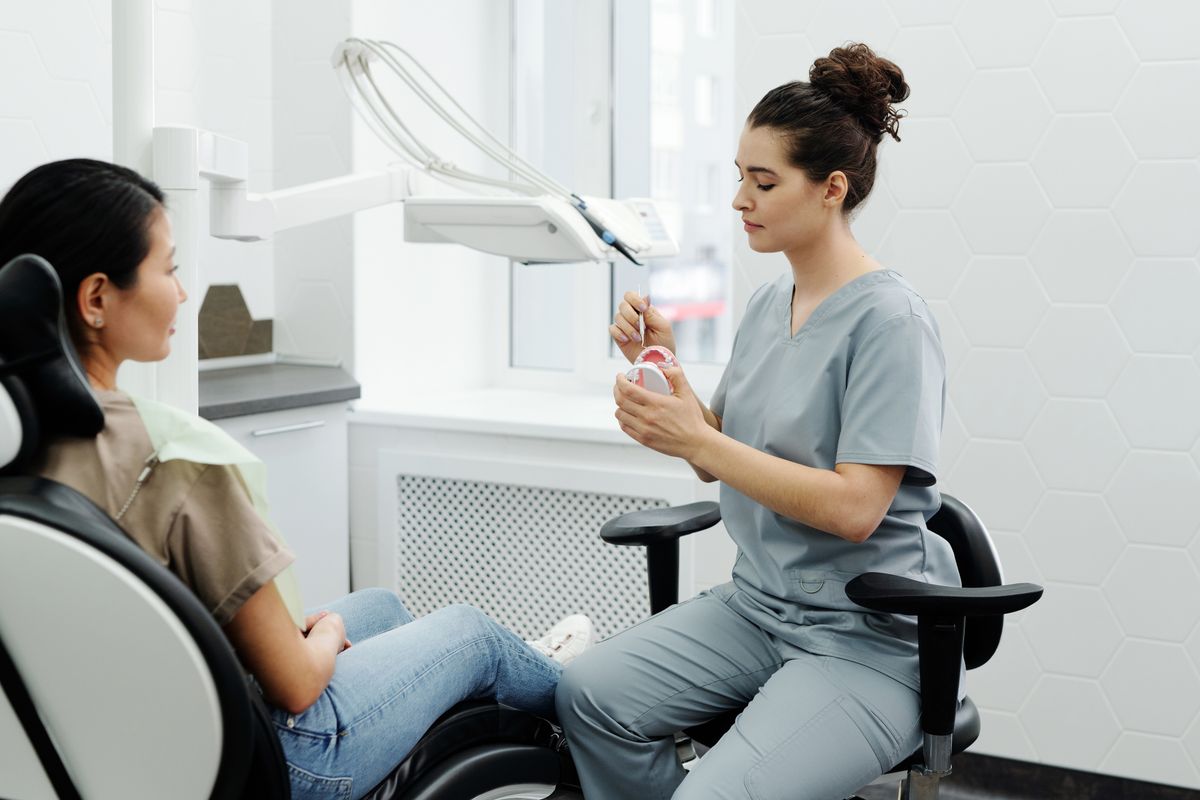
Cosmetic dentist talking a young woman through her smile design as she checks her teeth in a mirror
It starts with what you actually see when you smile.

The short answer: every cosmetic dentist is a general dentist first

We all went to dental school. We all did the same foundational training, and we all passed the same licensing exams. Nobody becomes a cosmetic dentist instead of becoming a dentist.

The difference is what we chose to do after that, and how deep we went into it. That is where two dentists who look identical on paper can end up doing very different work.

What a general dentist does

A general dentist is focused primarily on keeping your mouth healthy. That is essential work, and I do that work too. It covers the everyday care most people picture when they think about going to the dentist:

  • Regular cleanings and exams
  • Fillings when decay shows up
  • Crowns when a tooth breaks down
  • Treating gum disease
  • Catching problems early, before they become painful or expensive

If that is all you ever need, a good general dentist is exactly who you want. I would never talk anyone out of that.

Female dentist examining a woman's teeth during a routine dental checkup
Keeping your mouth healthy is the foundation for everything else.

What a cosmetic dentist adds

A cosmetic dentist who is really invested in this has gone further. We have spent years studying the aesthetic side of dentistry, and that is a different skill set that takes a long time to develop.

Smile design, not just teeth

It is not only about the tooth in front of you. It is proportion. It is how your teeth relate to your face, your lips and your gumline. A tooth that looks perfect on its own can look completely wrong in your smile if those relationships are off.

A veneer should look like a tooth, not a Chiclet

How a veneer is shaped is what makes it read as a real tooth instead of a flat white block. That comes from training your eye, and your hands, over a great many cases.

The analogy I always use

A family doctor and a plastic surgeon both went to medical school. The family doctor is critical. You need them. But if you are talking about a rhinoplasty, you are going to someone who has spent years on exactly that. It is the same idea here. The tools overlap. The eye is different, and the eye takes years to develop.

General dentist vs cosmetic dentist at a glance

General dentist Cosmetic dentist
Dental school and license Yes Yes, exactly the same
Main focus Health, prevention, decay and gum disease All of that, plus how your smile looks
Typical work Cleanings, exams, fillings, crowns Veneers, bonding, whitening, smile makeovers, aligner planning
Additional training Continuing education Years of smile design and aesthetic training
ADA recognized specialty No, it is general practice No

Is a cosmetic dentist a real dentist?

Yes, completely. A cosmetic dentist went through the same dental school, passed the same licensing exams and holds the same license as any other dentist.

What surprises people is the other side of that. Cosmetic dentistry is not a recognized dental specialty. The American Dental Association’s National Commission on Recognition of Dental Specialties and Certifying Boards recognizes twelve dental specialties, including orthodontics, periodontics and prosthodontics, and cosmetic dentistry is not one of them. That means, technically, anyone can call themselves a cosmetic dentist.

So the title on the sign does not tell you very much. The license is the same. The difference is the depth of focus, the training behind it, and the work you can actually see.

The training that actually matters

Let me tell you my story, because I think it explains this better than any list of credentials would.

Why I became a dentist

I have loved art since I was a kid. Drawing and creating were always my thing. When I was in high school trying to figure out what to do with my life, dentistry clicked for me in a very specific way. It was the one place where I could combine artistry, science and actually working with people. Making someone smile. That was it.

That is why I went to dental school at UNC. Even there, I was completing veneer cases, something almost no one else was pursuing at that stage. I remember waxing up a smile design once, and my professor pulled it out to show the entire class how to do it correctly. That meant everything to me, because I was not just checking boxes. I was genuinely obsessed with getting it right.

What came after dental school

Then I kept going. This is what that looked like:

  • A year-long residency in Advanced Education in General Dentistry, where I completed multiple complex cosmetic cases
  • Studying under Dr. Frank Spear, one of the most respected educators in dentistry and one of my first mentors in the deeper principles of occlusion and aesthetics. Today I lead a Spear Study Club.
  • A full course focused specifically on porcelain veneers, taught by Dr. Marvin Berlin
  • Training with Dr. Karla Soto on using Invisalign and SmileArchitect together, because the best cosmetic outcomes are not about teeth in isolation. They are about how everything fits.
  • More recently, deepening my work with Dr. Marshall Hanson, whose approach has shaped how I think about long-term smile health, not just short-term looks

That is the kind of training that matters. Not a weekend certification course that hands everyone a certificate. Years of mentorship, real cases, and continuing to study, because this field keeps evolving.

Dentist matching a shade guide to a woman's natural teeth before cosmetic treatment
Shape and shade are what make a veneer read as a real tooth.

Why conservative work is the whole point

The way I think about cosmetic dentistry now is using art to restore someone’s smile without having to cut away their good enamel.

We do not want to ruin a healthy tooth in order to make it look better, because we have to think about the long-term result. Enamel does not grow back, so a smile that looks great this year but cost you healthy tooth structure is not a good trade.

So when we plan a case, we look for the least invasive way to get there first. Depending on your smile, that might be:

  • Whitening, when color is the main thing bothering you
  • Bonding to reshape or repair a tooth without removing enamel
  • Straightening with Invisalign before anything else is touched
  • Veneers on only the teeth that actually show when you smile

A full makeover is one option, never the default.

The biggest misconception: that it is all about vanity

People come in almost apologetically sometimes, like they have to justify wanting a beautiful smile. I want to stop them right there.

The way you feel about your smile affects everything. Your confidence. How you show up in a room. Whether you laugh freely or hold back, whether you go for the job, take the photo, let yourself be seen. I have had patients who had not smiled openly in years, who covered their mouth when they laughed. When we finished their treatment, whether that was veneers, whitening or a full smile makeover, the shift was not just cosmetic. It was something much, much bigger.

She had been told her teeth could not be saved

One patient came to me because her daughter, who is also a patient of mine, recommended us. She came in very hesitant, worried that I would judge her.

She had already been to multiple dentists. Her upper teeth had been removed and replaced with a denture. Her lower teeth were dark, and she had been told many times that they could not be restored and would have to come out too. She had simply given up. She was not seeing a dentist at all until her grandchildren started asking why she had dark spots on her teeth.

She was so embarrassed that she stopped spending time with her friends. She was barely leaving the house. It truly affected her quality of life.

I examined every tooth and told her I would do anything I could to try to save them. And we were able to do just that.

Now when she comes to our office she is glowing. She is smiling and laughing with us. She told me it changed her whole life, and everyone tells her she has such a beautiful smile. She always did. She just was not able to show it anymore. Being able to give someone that back, so they can enjoy their life again, means so much to me.

She told her own story better than I can. This is her, in her words:

View this post on Instagram

Will cosmetic dental work look fake?

This is the other misconception: big, blinding white veneers you can spot from across the room. And yes, bad cosmetic dentistry is very visible. That is exactly why the artistry matters.

When it is done well, you should not be able to tell. The goal is always a smile that looks like the best version of yours. Natural, proportional, believable. If someone cannot tell you have had work done, we did our job.

My own dad’s veneers

I have a perfect example in my own family. My dad had really nice, straight teeth all his life. Over the past few years they wore down, food started getting stuck in the back, and his smile just was not his anymore.

I told him I wanted to restore that for him, and even my own dad was hesitant. He said he did not want a fake smile. I told him no, I want to give you back what you had. So I did veneers for him.

They look so natural that no one has noticed, including my husband, who works in the same office. He told me he had no idea my dad had veneers. My dad looks ten years younger, just the way I remember him from when I was growing up. And I inherited my smile from him, so that one was extremely special to me.

Here is his before and after:

View this post on Instagram

“The first time I was not thinking about my teeth”

Another patient was the accomplished, polished kind of person who has everything together on the outside. She described what she called a small thing: a few teeth she had always been self-conscious about. She had crowding fixed years earlier but never loved the final result.

We did a smile design consultation, looked at photos, and talked about proportions and about what she actually saw when she looked in the mirror. Then we did targeted, conservative work. Not a full makeover, just the teeth that showed most when she smiled.

She came back and told me something I still think about. She had given a presentation the week before, and for the first time she was not thinking about her teeth the whole time. That is it. That is the whole point. When cosmetic dentistry is done right, it gets out of your way.

How to choose a cosmetic dentist in Raleigh

Because anyone can use the title, the title alone will not protect you. This is what I tell people to do, wherever they end up going:

  1. Look at the actual work. Ask to see real before-and-after photos of the dentist’s own cases, not stock images.
  2. Ask about their training. Who did they study under, and for how long? The answers will tell you a lot.
  3. Ask what the conservative option is. A good cosmetic dentist should be able to explain how to reach your goal while keeping as much of your natural tooth as possible.
  4. Ask to see a smile design before anything is done. You should understand what you are getting before any tooth is touched.
  5. Read what patients say. Years of reviews from real people tell you how a practice actually treats you.

Our patients also voted for us. In the News and Observer’s annual Raleigh’s Best awards, Fusion Dental Care won Gold for Best Cosmetic Dentistry in 2025 and 2022, Gold for Best Dentistry in those same years, and Silver for Best Dentistry in 2024. Those are community votes, which is the kind I care about.

So who is the best cosmetic dentist in Raleigh? I will let the work and our patients answer that. You can see real cases in our smile gallery and read what our patients say. We have nearly 1,200 Google reviews with a 4.9-star average, and smile transformations are at the center of what I do.

Frequently asked questions

What is the difference between a dentist and a cosmetic dentist?

A general dentist focuses on dental health: prevention, decay, restorations and gum disease. A cosmetic dentist does all of that and has spent years of additional training on the appearance of your smile, including proportion, shape, shade and how your teeth fit your face.

Is a cosmetic dentist a real dentist?

Yes. Every cosmetic dentist graduated from dental school and holds the same license as any other dentist. Cosmetic dentistry is not one of the twelve specialties recognized by the ADA, so what sets a cosmetic dentist apart is their additional training and the quality of their work.

Can a general dentist do cosmetic dentistry?

Yes. Any licensed dentist can offer whitening, bonding or veneers. How the results turn out depends on how much training and experience that dentist has in aesthetic work, which is why seeing their own before-and-after cases matters so much.

Why do some dentists advise against veneers?

Usually because traditional veneers can mean removing healthy enamel, and enamel does not grow back. That is a fair concern. It is why I look at the most conservative option first, whether that is whitening, bonding, straightening, or veneers designed to preserve as much of your natural tooth as possible.

Does insurance cover cosmetic dentistry?

Dental insurance generally does not cover treatment done only to change how your smile looks. Work that also repairs a damaged or decayed tooth may be partly covered, so it is worth checking your plan. We also offer payment plans and a membership to make treatment easier to budget for.

Will veneers look fake?

They should not. Well-designed veneers are shaped and shaded to suit your face, your lips and the rest of your smile. If people cannot tell you have had work done, it was done right.

See what is possible for your smile

If something about your smile has been bothering you, come in for a consultation. We will show you real cases, talk through your goals, and give you an honest picture of what would actually make a difference, including whether you need anything cosmetic at all.

You can book your first visit, read more about my training and approach, or, if you are also thinking about replacing a missing tooth, see what dental implants cost in Raleigh.

Dentist at Fusion Dental Care in Raleigh holding a dental implant model

If you have been quoted a number for a dental implant in Raleigh and it made you wince, you are not alone. It is the first question almost everyone asks me, and it deserves a straight answer rather than “it depends.” So here is what implants actually cost around here, what you are paying for, and the specific things that move that number up or down.

Woman smiling in a dental chair as her dentist prepares for an implant consultation
Most implant conversations start with cost. It should be the easiest part to explain.

What a dental implant actually costs in Raleigh

I will be straight with you. In North Carolina, a single implant from start to finish runs somewhere between $5,000 and $6,500 at most reputable practices, depending on your situation. That is the going range, and it is what you should expect to hear if you call around.

Why the quote usually arrives in two pieces

Here is the part that catches people off guard. That total is often not one bill from one office.

If you are sent to a specialist for the surgery, the implant placement itself typically runs $2,000 to $3,000. That covers the post, the titanium screw that goes into the bone. But a screw in your jaw is not a tooth. You still have to go back to a general dentist who makes and fits the crown on top, and that is usually another $3,000.

So you do not truly have a tooth until both halves are done, and the real number lands somewhere around $6,000. Two offices, two schedules, two bills, and a lot of room for things to fall between the cracks.

That split is not just an accounting detail. It means two sets of records, two people forming an opinion about your case, and nobody who owns the outcome from beginning to end. When the surgeon and the restoring dentist are different people in different buildings, the handover is where problems tend to appear, and the patient is the one who ends up carrying messages between them.

What that looks like side by side

What you are paying for Typical Raleigh pricing Fusion membership package
Consultation Often billed separately Included
3D cone beam CT scan Often billed separately Included
Custom surgical guide Often billed separately Included
Implant placement surgery $2,000 – $3,000 Included
Abutment and crown About $3,000 Included
Total $5,000 – $6,500 $3,500

What our $3,500 implant package includes

At Fusion we put together a membership package that brings everything, and I mean everything, down to $3,500. That is roughly half of what the same treatment costs when it is split across multiple offices.

Everything in the package

  • The consultation
  • A 3D cone beam CT scan, taken in our office
  • A digital scan of your teeth using our iTero 3D scanner
  • A custom surgical guide, designed and 3D printed here
  • The implant placement surgery, with conscious sedation available
  • The abutment
  • The crown, which is the part that finally gives you a tooth again

When people hear that number next to what they have been quoted elsewhere, the reasonable reaction is that it sounds too good to be true. I understand that. It is not a bait and switch. It is a package we built deliberately so our patients do not have to nickel and dime their way through treatment, and so nobody gets halfway through and discovers the crown was never included.

Why implants cost what they do

Here is what I tell patients: you are not paying for one appointment. You are paying for the whole journey.

The planning happens before we touch anything

We take a 3D cone beam CT scan up front, on our own equipment, and I use it to plan exactly where that implant goes. We are not guessing and we are not eyeballing it.

Then we scan your teeth with a 3D scanner to get a digital mould, and from that scan plus the 3D x-ray we make a custom surgical guide, printed here in our own office. That guide is why placement is so precise, and it is also why it is comfortable: with a guide, we often do not have to open up the gum tissue at all. Healing is faster and the whole thing is far easier on you.

The parts themselves have to meet a standard

Dentist matching a crown shade against a female patient's natural teeth
The 3D scan is what turns placement from an estimate into a plan.

That guided, flapless approach matters more than it sounds. Opening the gum tissue is what makes implant surgery feel like surgery, and it is a large part of why recovery is uncomfortable when it is uncomfortable. Avoiding it is better for healing, better for the gum line around the finished tooth, and a great deal better for how the appointment feels.

The implant fixture, the titanium post, has to meet very specific manufacturing standards. Then there is the abutment, and the crown made by our lab once we scan the final implant position. Add the surgical time and every follow-up visit, and there is genuinely a lot in there.

All of it is wrapped into the $3,500. When I explain the value, I show people exactly what is included. There is no mystery and no “the implant is this much, and now here come the add-ons.” One number, one package, done.

I always say implants are the closest thing we have to a real tooth, and they are designed to last. When you spread $3,500 across twenty or thirty years, you are talking about a few dollars a month. That math changes the conversation completely.

Does getting a dental implant hurt?

Honestly, this is the question where people are most surprised by the answer. Getting an implant is not what you are imagining.

What the appointment actually feels like

You are numb the whole time. You feel pressure, but not pain. Most of my patients come back afterwards and tell me it was far easier than they expected, and that there was basically no pain at all. The anticipation is worse than the reality, almost every time.

Relaxed female patient smiling after a comfortable dental implant appointment
The anticipation is almost always worse than the appointment.

Recovery, honestly

The soreness afterwards is very manageable. Most people take an ibuprofen the same day and that is the end of it. Plenty go back to work the same day or the next.

I have had patients tell me a tooth extraction was considerably harder than the implant, and in my experience that is genuinely true.

If you need bone grafting first, there is more involved and the recovery takes a little longer. But the implant itself tends to leave people pleasantly surprised.

How long the whole process takes

People often assume an implant is a single long appointment. It is really a short series of short visits with a healing period in the middle, and knowing that up front makes the whole thing much easier to plan around.

The straightforward case

If the tooth has been missing for a while and the bone is healthy, we scan, plan and place the implant, then let it heal for around three months while the bone integrates with the post. After that we scan the final position and fit the crown. Two short appointments, with a wait in between during which you carry on with your life normally.

When a tooth still has to come out

If the tooth is broken and still in place, we extract it and place a bone graft first. That graft needs time to heal before the site can take an implant, which adds months rather than weeks to the timeline. It is not a complication, it is just a longer road, and it is far better to know that at the start than to discover it halfway through.

This is also the honest reason I encourage people not to wait. A tooth that has just broken is a simpler case than the same tooth six months later, and simpler cases cost less.

What moves the price up or down

The package price assumes a straightforward case. Here is what makes a case straightforward, and what does not.

  • A tooth that has been missing for a while. We look at the 3D x-ray, and if the bone is good, the site is ready for placement. This is exactly where the package price applies, because there is nothing else to do first.
  • A broken tooth that still needs to come out. Now we extract, place a bone graft, wait for it to heal, and then place the implant. More visits, more time, more cost.
  • Neighbouring teeth that also need crowns. That is separate work alongside the implant.
  • More than one implant. An implant bridge or a full arch prosthesis is a different scale of treatment entirely.
  • Where the tooth sits in your mouth. A front tooth is a cosmetic case. Matching it to your other teeth so it genuinely disappears takes real effort, and that is reflected in the work.

This is why patients who come in before things get complicated so often find the package is exactly what they need, with no surprises.

How to afford a dental implant in Raleigh

I never want cost to be the reason somebody walks around with a missing tooth. There is almost always a way to make it work.

Start with the package

The $3,500 membership package is honestly the best place to begin the conversation, because it removes most of the sticker shock before we get to financing at all.

Female dentist explaining a dental implant model to a woman in her clinic
There is nearly always a route that works. It starts with a conversation.

Financing and payment plans

  • CareCredit and Cherry. Both let you break the cost into monthly payments most people can actually work with.
  • Our own in-office arrangements. We have payment plans we run ourselves, which gives us room to be flexible.
  • Phasing the treatment. We can place the implant first and let it heal, which takes about three months, then do the crown a few months after that. It spreads the cost across a longer stretch.

Just have the conversation with us. That is usually how we find the way through.

What about cheap implants abroad, or at discount clinics?

I want to be careful here, because I am not interested in trashing anyone. I do want to be honest with you.

What I have seen go wrong

I have treated patients who had implants done in other countries, Mexico, Turkey and elsewhere, and at clinics advertising very attractive prices. Sometimes it is completely fine.

But I have also seen cases where the components were lower grade, or the planning was not done properly because the technology was not available, and something failed. Fixing a failed implant here is almost always more expensive and more complicated than doing it correctly the first time.

Then there is follow-up care. If something goes wrong six months later, are you flying back? Or are you coming to me, and now I am inheriting someone else’s work?

There is a practical problem too. Every implant system has its own components and its own instruments. When an implant was placed overseas, the parts we need are sometimes not even sold in the United States. That is a genuinely difficult position to be in.

Questions to ask before you book anywhere

This applies to any practice, including mine. Ask these four things:

  1. What brand of implant do you use?
  2. How many have you placed?
  3. Can I see your work? Especially for anything in your smile line. Look at an actual case gallery.
  4. What happens if something fails?

The answers will tell you a great deal. You should not just go anywhere for an implant that sits in your smile.

Part of why we built the package the way we did is that I want people to see you do not have to go abroad to get a fair price. All-inclusive treatment, right here in Raleigh, from a practice that places implants and restores them under one roof, is genuinely competitive with what people chase overseas, without the risk. And you are not getting lost between specialists, because we do the whole thing in one place.

Woman smiling confidently after completing her dental implant treatment
For most people this was never really about a tooth.

What getting a tooth back actually means

The case that stays with me is a young woman in her twenties who was congenitally missing both upper lateral incisors, the teeth either side of her front two. She had been given Maryland bridges over the years, and just as she was getting ready to leave for college, one of them broke off completely. Her dentist did not know what to do for her.

She was walking around with a missing front tooth. Her parents found my work as a cosmetic dentist here in Raleigh and brought her in. Within three months we gave her back both of the teeth she was born without.

She has been so happy since. I believe she just got married. She told me it was the first time in as long as she could remember that she actually wanted to smile, and her parents said she had never sent them so many photos.

That is the investment. For a lot of people it is not just a tooth. It is something much bigger than that.

Real implant results from our office

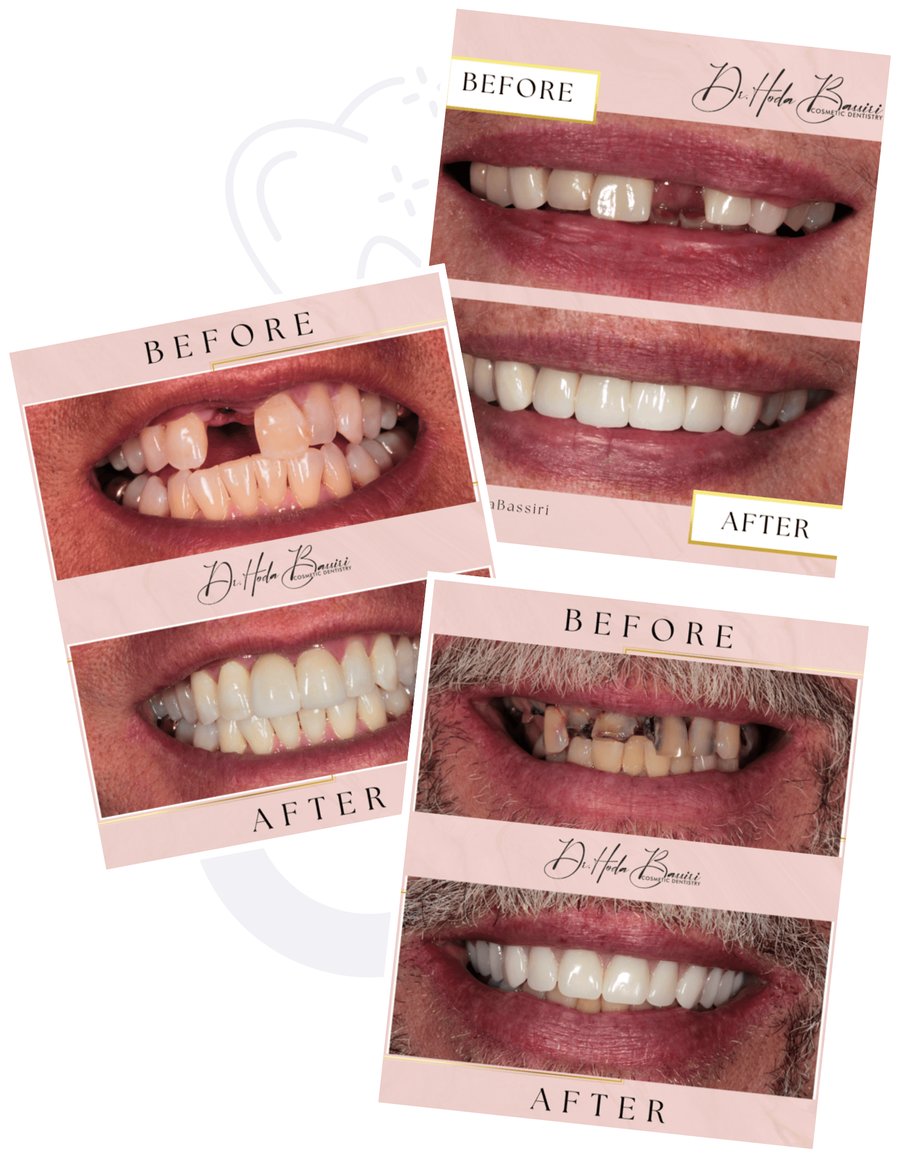
It is easier to think about the cost when you can see what you are actually getting. These are three implant cases from our office, before and after. Every mouth is different, which is exactly why every quote is different, but the goal is always the same: a tooth that looks and feels like it has always been yours.

Before and after photos of three dental implant cases treated by Dr. Hoda Bassiri at Fusion Dental Care in Raleigh
Before and after: three dental implant cases from Fusion Dental Care in Raleigh.

Hear it from one of our patients

I would rather you hear it from someone who has been through it than from me. This is one of our implant patients talking about the experience with our office.

Frequently asked questions

What is the average cost of dental implants in NC?

Across North Carolina, a single implant from consultation to finished crown generally runs $5,000 to $6,500, and that total is often split between a surgical specialist and a general dentist. At Fusion, our membership package covers the entire process, including the scan, surgical guide, surgery, abutment and crown, for $3,500.

Do they pull all your teeth at once for implants?

No. For a single missing tooth we replace only that tooth. Full arch treatment, where a whole upper or lower set is replaced, is a different procedure that we would only discuss if your situation actually called for it. Most of the implant work we do is one tooth at a time.

How painful is it to get teeth implants?

Far less than most people expect. You are numb throughout and feel pressure rather than pain. Afterwards the soreness is usually managed with ibuprofen, and many patients return to work the same day or the next. Several have told me an extraction was harder. If you need bone grafting first, expect a slightly longer recovery.

How do you get implants if you cannot afford them?

Start with the $3,500 package, which removes most of the cost gap on its own. From there we offer CareCredit and Cherry for monthly payments, our own in-office plans, and the option to phase treatment so the implant and the crown are paid for months apart. Come and have the conversation, because there is usually a route that works.

How long do dental implants last?

An implant is designed to last a very long time with good care and regular cleanings. That is the point of doing the planning properly up front. Spread the cost across decades and it becomes a few dollars a month.

Will anyone be able to tell it is an implant?

That is the whole objective, and it is most of the work on a front tooth. The crown is made to match the shade, translucency and shape of the teeth either side of it. This is where it matters that the person placing the implant also understands cosmetic work, because the position of the post determines what the crown can look like. Get the placement wrong and no laboratory can rescue the appearance.

What if I have been missing the tooth for years?

Come in and let us scan it. Bone does recede over time when there is nothing stimulating it, so a long-missing tooth is more likely to need grafting first. But that is not a refusal, it is just an extra stage, and I would far rather tell you exactly where you stand than have you assume the answer is no.

Come and talk to us about your situation

Every mouth is different, and the only way to know what your case actually needs is to look at it. That is what the consultation is for, and it is included.

If you are weighing up an implant, book a visit and we will take the scan, look at the bone, and tell you plainly what is involved and what it will cost. If you want more background first, our page on the benefits of dental implants is a good place to start, and you can read more about my approach and training.

If you are in pain right now, do not wait for an appointment slot. Call us about emergency dental care.

For independent background on implants, the American Dental Association’s consumer site has a plain-language overview of dental implants, and the National Institute of Dental and Craniofacial Research publishes national data on tooth loss.

image

Choosing the right family dentist can feel overwhelming, especially with so many options available in Raleigh. However, finding a provider who meets your family’s unique needs is essential for maintaining good oral health. In this guide, we’ll share seven essential tips to help you make an informed decision and ensure that your family’s smiles are in great hands.
A father and daughter discuss dental care with a dentist reviewing an X-ray.

1. Assessing Qualifications and Credentials

Start by checking the dentist’s qualifications. Look for their educational background, certifications, and any special training they’ve received in family dentistry. A qualified dentist will have a degree from an accredited dental school and should be licensed to practice in North Carolina. But don’t stop there! Dig deeper by looking into any specialties they might have, particularly those that can benefit your family’s specific needs.

Beyond their formal qualifications, take into account how long they’ve been practicing. Experience can be a significant factor, particularly in the nuanced field of family dentistry, which often needs a gentle approach when working with children. A well-established dentist in Raleigh will likely have a wealth of knowledge and experience dealing with various dental issues.

2. Understanding the Range of Services Offered

Make sure the dental provider offers a comprehensive range of services, from routine check-ups to more complex procedures, ensuring your family can receive all necessary care in one place. It’s convenient to have a single provider who can handle everything from preventive care to orthodontics, if needed.

Look for additional services like pediatric dentistry, cosmetic options, or even holistic dental practices. These offerings can make a big difference in terms of comfort and ease when caring for your family’s diverse dental needs. The more services available, the less likely you’ll find yourself needing to visit another office, which can be a hassle for busy families.

3. Reading Reviews and Testimonials

Take time to read online reviews and testimonials from other patients. This feedback can provide insight into the quality of care and the overall patient experience. Pay close attention to comments about the staff’s demeanor, the office environment, and how the dentist interacts with patients, especially children.

Personal recommendations from family and friends can also be invaluable. If someone you trust had a great experience with a Raleigh family dentistry provider, that’s often a compelling reason to consider them. Combine these reviews with online feedback to create a balanced view before making your decision.

4. Considering the Office Environment

Visit the dental office beforehand if possible. A clean, welcoming environment with friendly staff can make a big difference in how comfortable your family feels during visits. When you walk into a dental office, it should feel inviting and calm rather than intimidating or sterile.

Take note of how the staff treats patients during your visit. A courteous and efficient front desk, along with approachable dental assistants, can create an atmosphere that eases anxiety—an essential consideration if you have children who may be nervous about dental appointments.

5. Evaluating Insurance and Payment Options

Check if the dental provider accepts your insurance plan or offers flexible payment options. Knowing the costs upfront can help avoid surprises later on. It’s essential to understand what your plan covers, including routine cleanings, x-rays, or other procedures.

Some dental practices provide payment plans or financing options, which can make dental care more accessible for families. A provider willing to work with you on financial matters demonstrates their commitment to helping you maintain your family’s oral health without undue stress.

6. Inquiring About Emergency Care

Ask potential dentistry providers about their policies for handling dental emergencies. Knowing how they respond can give you peace of mind in case of unforeseen issues. Emergencies can happen at any time—think of a toothache on a weekend or an injury during a sporting event—and having a trusted provider who can accommodate urgent situations is crucial.

Inquire whether they offer after-hours services or have a system in place for emergencies. A reliable Raleigh family dentistry provider will not only treat emergencies effectively when they arise but will also offer guidance on how to handle them until you can get to their office.

7. Trusting Your Instincts

Finally, trust your instincts. If you feel comfortable and confident in your choice, that’s often a good sign that you’ve found the right family dentist for you. Personal comfort is key; the rapport between the dentist and your family can significantly influence your overall experience.

Don’t hesitate to ask questions during your initial consultation. This will give you a feel for how the dentist communicates and listens to your concerns. The best family dentistry provider will take the time to ensure you’re well-informed and comfortable with your dental care choices.

image

If you’re considering a solution for missing teeth, dental implants might be the perfect choice for you. Not only do they restore functionality, but they also provide a natural look and feel. In this blog, we’ll explore the top benefits of choosing dental implants, so you can make an informed decision about your dental health.
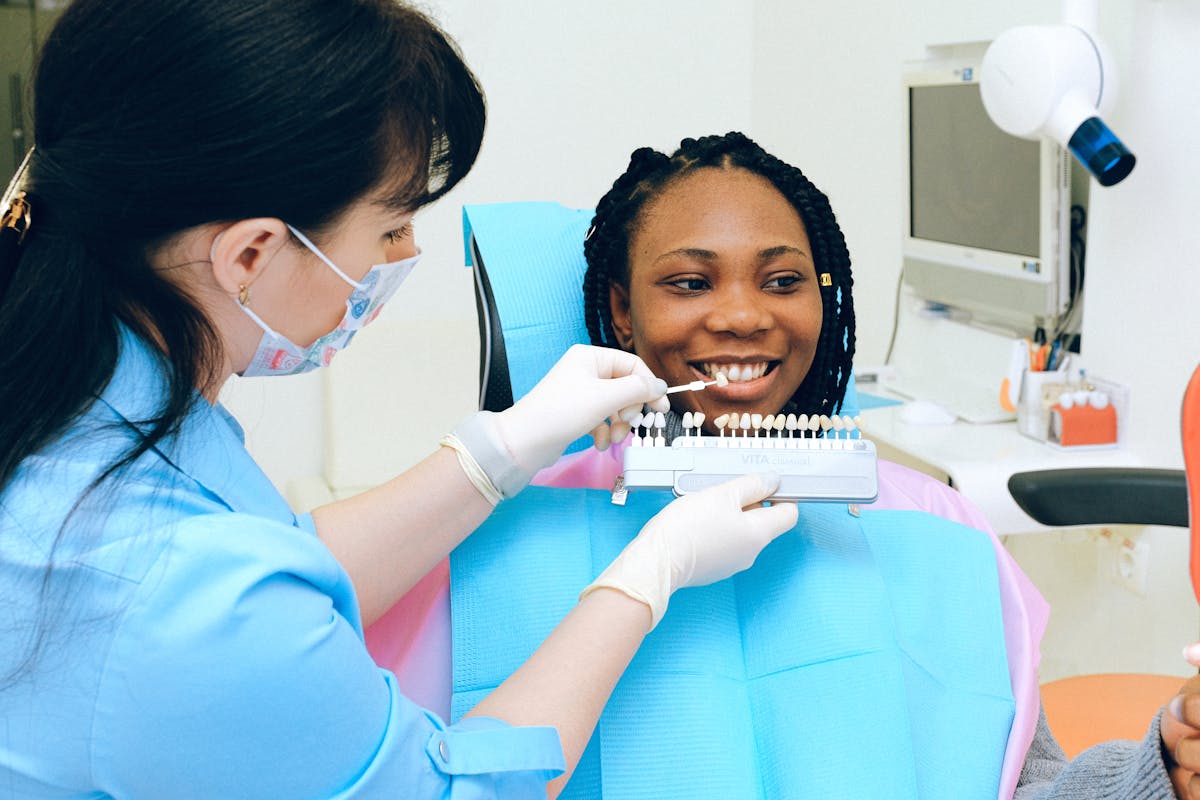
Dentist consults patient with teeth color samples in a modern dental clinic.

1. Restore Your Smile’s Aesthetic Appeal

Dental implants closely mimic the look and feel of natural teeth, allowing you to smile confidently again. Imagine sitting at a dinner table, laughing and enjoying your time, all while knowing that your smile looks just as it did before losing a tooth. This benefit is about more than just appearance; it’s about the freedom to embrace life without feeling self-conscious.

Furthermore, implants are designed to blend seamlessly with your natural teeth. The color, shape, and even the subtle nuances of your existing teeth can be replicated in these implants. This attention to detail means each patient receives a customized solution that doesn’t just restore function but enhances the entire facial aesthetic.

2. Boost Your Confidence and Self-Esteem

With a complete and natural-looking smile, you may feel more self-assured in social situations. It’s fascinating how a small change, such as restoring a missing tooth, can spark a significant boost in your confidence. Many individuals find themselves smiling more often, engaging in conversations, and enjoying social experiences without the fear of embarrassment.

Imagine receiving compliments on your smile—this is a reality for many dental implant patients. Enhanced confidence often translates into a brighter demeanor, and your interactions with others can improve significantly. After all, a genuine smile has the power to connect us with the world around us.

3. Enjoyability of Your Favorite Foods

Implants allow you to eat and enjoy your favorite foods without restriction, unlike traditional dentures which can slip and slide. Whether it’s biting into a crisp apple or savoring a hearty steak, implants grant you the freedom to relish culinary delights without worry.

Moreover, with implants, you regain the ability to taste your food fully. Unlike some denture wearers who may experience diminished taste sensation, dental implants do not cover the palate, thus leaving your taste buds unimpeded. This whole experience revitalizes your passion for food, enhancing both your enjoyment and nutritional habits.

4. Long-Term Solution for Missing Teeth

Dental implants provide a durable solution that can last for many years, often a lifetime with proper care. This long-term approach is particularly appealing when considering the cost-effectiveness of implants compared to other dental solutions like bridges or dentures, which may need frequent replacements over time.

In reality, investing in dental implants could mean saving on future dental work. Instead of worrying about annual adjustments or replacements, you can enjoy peace of mind knowing you’ve chosen a trustworthy solution. It’s an investment in your health and your smile that pays dividends for years to come.

5. Prevention of Bone Loss

Implants help stimulate the jawbone, preventing bone loss that can occur when teeth are missing. This is a crucial aspect of dental implants that many may not realize. When a tooth is lost, the underlying bone begins to deteriorate due to lack of stimulation, which can lead to further dental issues.

With dental implants, this process is halted. They mimic the root of a natural tooth and encourage bone growth. This dynamic not only maintains your jawbone but supports your overall facial structure, which can contribute to a more youthful appearance.

6. Maintain Facial Structure

By preventing bone loss, dental implants help maintain your facial structure, keeping you looking youthful. Many people do not realize that missing teeth can lead to a sunken facial appearance, which can age you prematurely. Implants fill in this gap, supporting the cheeks and lips, thus maintaining a natural contour.

In fact, having a strong jawbone and full facial structure contributes significantly to one’s overall aesthetic. Therefore, opting for dental implants not only revitalizes your smile but also transforms your face, allowing you to maintain the vibrant look you may have once taken for granted.

7. Convenience and Comfort

Unlike dentures, implants do not slip or shift, providing a more comfortable and reliable fit. This convenience allows you to speak and eat without fear of loosening, making daily life much simpler. The sense of security that comes with implants can be life-changing.

Many patients express relief about no longer needing to use messy adhesives or worry about their dentures coming out at inopportune moments. This comfort extends beyond physical factors; it improves mental well-being by removing the anxiety often associated with tooth loss.

8. Simplified Oral Care Routine

Caring for dental implants is similar to maintaining natural teeth—just brush and floss daily! This simplicity makes it easier for individuals to incorporate them into their regular oral health regimen. Unlike dentures that require additional cleaning solutions or specific techniques, implants can be treated just like your own teeth.

This ease of care means patients are more likely to maintain their oral hygiene, leading to better long-term outcomes. A straightforward routine not only fosters good dental health but also keeps your implants in excellent condition for years to come.

9. Enhanced Speech Quality

Implants can improve speech clarity, which may be affected by missing teeth or dentures. Many people do not realize how their speech is interconnected with their dental health until they experience the difference after treatment. Implants help create a more natural sound when speaking.

The alignment and stability offered by dental implants can help you articulate words more clearly, enhancing communication. Picture a joyful conversation where you speak without hesitation, no longer adjusting your speech to accommodate gaps or shifting dentures.

10. Tailored to Individual Needs

Dental implants can be customized to match the size, shape, and color of your natural teeth, ensuring a perfect fit. This personalization process is crucial because it addresses the unique requirements of each patient. No two smiles are the same; therefore, having an implant that feels like it belongs is essential.

Your dentist will collaborate with you to create a tailored treatment plan, ensuring that the final outcome meets your aesthetic and functional needs. In essence, each implant becomes a unique piece designed just for you, blending beautifully with your smile.

image

Are you considering a smile makeover? Dental veneers could be the perfect solution for achieving the dazzling smile you’ve always wanted. In this article, we’ll explore some of the standout benefits of dental veneers and why they are a popular choice for those looking to enhance their smiles.
Dentist consults patient with teeth color samples in a modern dental clinic.

1. Achieving a Perfectly Whitened Smile

Dental veneers provide a brilliant white finish, helping you achieve a bright smile that can be customized to your preference. This customizability is essential because everyone’s smile is unique, and it allows you to choose a shade that not only looks natural but also complements your skin tone. As a result, many patients find that their appearance improves instantly, leading to a renewed sense of pride in their smile.

What’s more, the whitening effect offered by veneers is long-lasting. Many common whitening procedures can fade over time, but the porcelain used in dental veneers resists stains and maintains its brilliant properties. Therefore, investing in dental veneers ensures that your smile remains consistently radiant.

2. Correcting Alignment Issues

Veneers can mask minor misalignments and gaps between teeth, offering a straighter appearance without the need for braces. This ability to conceal imperfections is one of the main selling points for those who are hesitant about undergoing orthodontic treatments. Instead of spending years in braces, patients can achieve a perfect smile in just a couple of dental visits.

Additionally, this non-invasive correction can be a game-changer for adults who may have avoided braces in childhood. Not only does this approach save time and discomfort, but it also provides immediate results, making dental veneers an ideal option for busy individuals looking to enhance their appearance without long-term commitments.

3. Durability That Lasts

Crafted from high-quality materials like porcelain, veneers are sturdy and can withstand the rigors of daily use, lasting for years with proper care. This durability provides not just a cosmetic solution, but also a practical one, as patients won’t have to worry as much about chips or cracks. In fact, many patients often share that they forget they even have veneers—they feel as natural as their own teeth!

With a lifespan typically ranging from 10 to 15 years, dental veneers can be a long-term investment in your smile. Routine dental hygiene practices such as brushing and flossing, combined with regular check-ups, can significantly extend the life of your veneers, ensuring that you enjoy their benefits for many years.

4. Quick Smile Enhancement

The process of applying dental veneers is relatively quick, making it a convenient option for those looking to enhance their smile without lengthy procedures. Most patients can expect to complete the application process in just two to three visits to the dentist, which is significantly faster than other cosmetic options that demand more time and investment.

During the first visit, your dentist will create a mold of your teeth, choose the appropriate shade, and may prepare your teeth for the veneers. The second appointment typically involves placing the custom veneers, resulting in an instant transformation. This efficiency makes dental veneers an attractive option for individuals with busy schedules who desire significant changes without a substantial time commitment.

5. Stain Resistance

Unlike natural teeth, dental veneers are highly resistant to stains, which means they maintain their beauty even after years of use. This characteristic is especially important for individuals who enjoy coffee, red wine, or other stain-inducing foods and beverages. While traditional whitening treatments may require frequent touch-ups, dental veneers remain pristine with minimal upkeep.

Moreover, the non-porous surface of porcelain veneers ensures that they do not absorb pigments. As a result, many patients find that their smiles continue to look bright and vibrant well into the future, giving them the confidence to smile freely.

6. Minimally Invasive Procedure

The application of veneers requires minimal alteration to your natural teeth, preserving more of your tooth structure compared to other cosmetic options. This preservation of tooth structure is vital because it means that your overall oral health remains largely intact, minimizing potential complications associated with more invasive procedures.

Additionally, the minimally invasive nature of the veneer process means less discomfort and a quicker recovery time, allowing you to enjoy your new smile almost immediately. In essence, you get all the benefits of a beautiful, enhanced smile without the significant drawbacks that can accompany more extensive dental work.

7. Boosting Self-Confidence

Having a perfect smile can significantly boost your self-esteem and confidence, leading to better social interactions and opportunities. The psychological effects of a beautiful smile shouldn’t be underestimated, as many studies have shown that a confident smile can open doors in both personal and professional environments.

Imagine walking into a room, meeting new people, and feeling completely at ease with your smile. That’s the power of dental veneers. They’re not just about aesthetics; they can transform the way you perceive yourself and, ultimately, how others perceive you. This newfound confidence can empower you to take on challenges, engage in social situations more freely, and enjoy life to the fullest.

8. Personalized Smile Design

Dental professionals can tailor the shape, size, and color of veneers to match your desired aesthetic, ensuring a customized smile transformation. This level of personalization allows you to create a smile that truly reflects your personality and style.

During the consultation process, you can express your preferences, and your dentist will work with you to achieve the ideal look. This collaborative approach not only results in a smile you’ll love but also fosters a sense of ownership over your transformation. You’ll leave the dentist’s office not just with better teeth, but with a smile that feels perfectly ‘you.’

9. Improving Oral Health

By covering damaged or worn teeth, veneers can help protect your oral health while enhancing the overall appearance of your smile. This protective aspect is crucial, particularly for individuals with weakened enamel or those who have experienced trauma to their teeth.

Moreover, by restoring the integrity of your smile, dental veneers can also help maintain proper alignment and functionality, reducing the risk of further dental complications down the line. Patients often find that their overall dental health improves, and they are less likely to experience tooth sensitivity or other issues as a result.

10. Versatility for Various Dental Issues

Whether you have chips, gaps, or discoloration, dental veneers can effectively correct a variety of cosmetic dental concerns, offering a versatile solution. This adaptability makes them suitable for patients with diverse needs, providing flexibility in treatment options.

From enhancing the appearance of small chips to concealing significant color stains, dental veneers can masterfully transform your smile in ways that many other procedures may not. This versatility empowers patients to address multiple issues in one fell swoop, thereby streamlining their journey to a radiant smile.

Skip to content